The Wood 2009 paradox — why affirmations backfire for the people who need them most
In 2009, three psychologists found that the affirmation 'I am a lovable person' made people with low self-esteem feel worse, not better. It's one of the most important and least-known findings in self-help. Here's what the study actually showed, why it happens, and the conditional phrasing that fixes it.


In 2009, three psychologists at the University of Waterloo published a four-page paper with a title that reads like a warning label: Positive self-statements: Power for some, peril for others. The finding inside it is one of the most important in the entire self-help literature, and one of the least known outside of academic psychology. Joanne Wood, W. Q. Elaine Perunovic, and John Lee found that the affirmation "I am a lovable person" — the kind of sentence printed on a thousand pastel graphics — made people with low self-esteem feel worse. Not neutral. Worse than a control group who did no affirmation at all. Here is exactly what the study showed, the mechanism that explains it, and the phrasing fix that the same research points toward.
The finding (Wood, Perunovic & Lee, 2009) that repeating a declarative positive self-statement can lower mood and state self-esteem for individuals with low self-esteem — the very people such statements are typically marketed to — while mildly benefiting individuals with high self-esteem. The effect is driven by cognitive dissonance between the statement and the held self-belief, and is reduced or reversed by conditional, process-focused phrasing.
What the study actually found
The design was simple, which is part of why the result has held up. Participants were sorted by a standard self-esteem measure into low and high groups. Some were asked to repeat the statement "I am a lovable person" and to focus on how it felt true. Others were given no such instruction. Then everyone's mood and momentary self-esteem were measured.
For people with high self-esteem, repeating the affirmation produced a small lift — roughly what you'd intuitively expect. For people with low self-esteem, repeating "I am a lovable person" produced the opposite: lower mood and lower state self-esteem than the control group who said nothing.Wood 2009 In a follow-up condition, participants were allowed to focus on ways the statement was both true and not true. Even that more permissive framing did not rescue the low-self-esteem group.
The headline, stated plainly: the affirmation most associated with self-help comfort made the people who most need comfort feel worse. The people it helped were the ones who were already doing relatively fine.
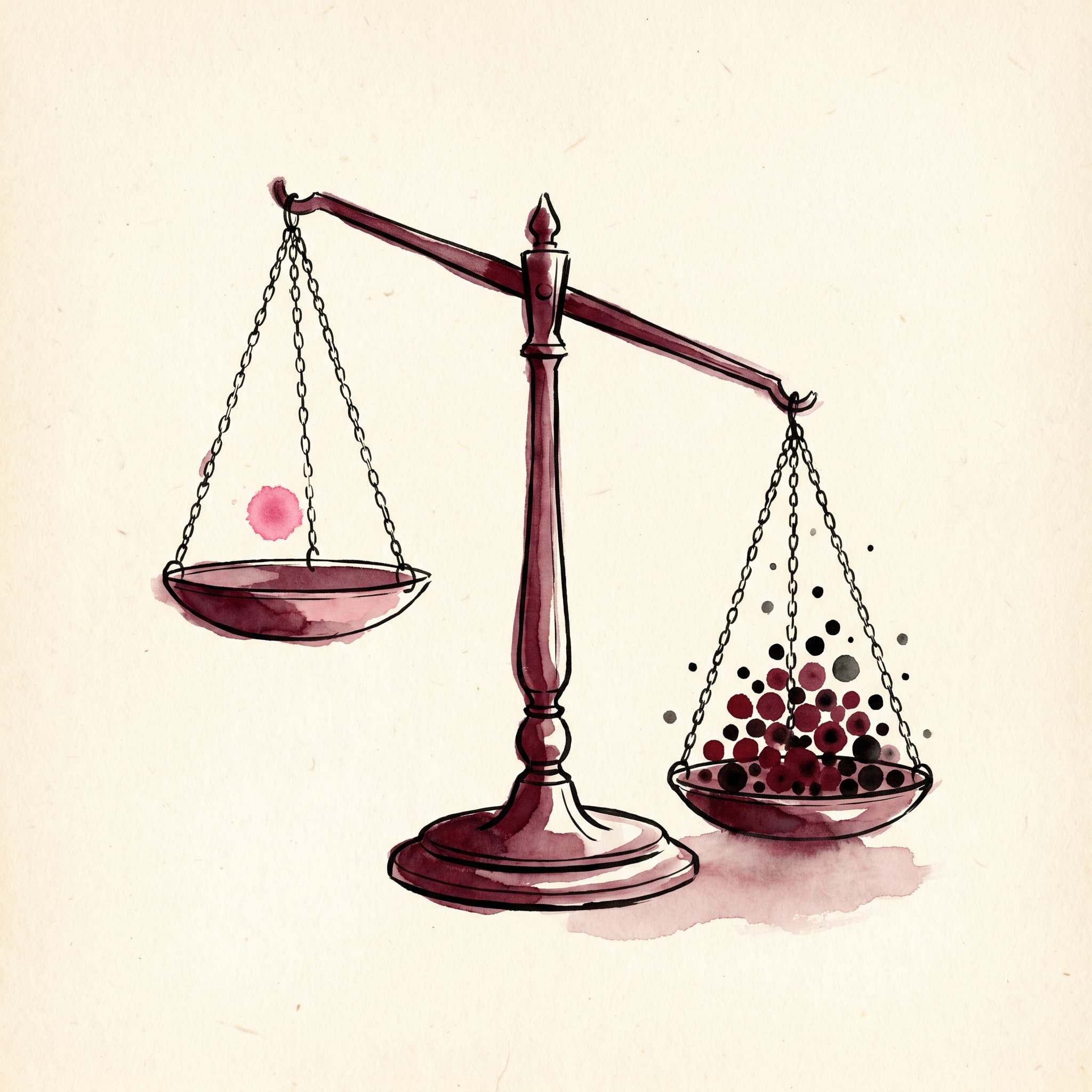
Why it happens — the dissonance mechanism
The explanation Wood and colleagues offered, which fits with decades of cognitive-dissonance research, is about how the brain handles a contradiction.
When you hold a self-belief — I am not lovable — and you encounter a directly contradicting statement — I am a lovable person — your mind does not weigh the two and split the difference. It defends the incumbent. The contradicting statement triggers a counter-argument, and the counter-argument is built from the evidence the original belief was made of: no I'm not — remember the relationship that ended, the call that wasn't returned, the way I am when I'm tired. The affirmation, intended to install a kinder belief, functions instead as a retrieval cue for every piece of evidence against it.
This is the cruel efficiency of the paradox. The more earnestly a low-self-esteem person tries to feel the truth of "I am a lovable person" — exactly as the instruction asked — the more actively they rehearse the case against it. The repetition strengthens the wrong network. You are, in effect, practicing the rebuttal.
For someone with high self-esteem, the same sentence sits close to what they already believe. There is no contradiction to defend against, so the statement is simply absorbed as mild reinforcement. The gap between statement and belief is small, so no dissonance fires.
What the paradox does NOT say
It is worth being precise, because this finding is easy to over-read in both directions.
It does not say affirmations are useless. Claude Steele's foundational self-affirmation theory — a separate and robust line of work — shows that affirming a core value (writing about why family or creativity or honesty matters to you) before a threat reduces defensiveness and improves outcomes.Steele 1988 Cascio's 2016 fMRI work shows self-affirmation activates reward and self-processing regions of the brain.Cascio et al. 2016 Value-affirmation and self-statement affirmation are not the same intervention, and Steele's version is not what Wood's study found fault with.
It also does not say low-self-esteem people are broken or beyond help. The same research literature is unusually clear about what does work for this group. The problem Wood identified is specifically with declarative statements that overshoot the current self-belief. Change the grammar, and the dissonance largely disappears.
The fix — conditional phrasing
The same body of research points to a workaround that is almost embarrassingly simple: stop claiming the arrival, and claim the direction instead.
A declarative affirmation asserts a finished state: I am confident. I am loved. I am enough. If your self-belief contradicts it, the brain refutes it. A conditional or process-focused affirmation asserts movement: I am learning to trust myself. I am becoming someone I'm on better terms with. I am someone who keeps showing up. The brain has nothing to refute, because the statement does not claim you have arrived — only that you are in motion, which is verifiable from the simple fact that you are trying.
This maps onto Albert Bandura's work on self-efficacy, which found that beliefs about one's capacity to act are more behaviorally powerful, and more resistant to contradiction, than beliefs about one's fixed traits.Bandura 1977 I am someone who is working on this is a self-efficacy statement. I am enough is a trait claim. The first is durable. The second is brittle in exactly the population Wood studied.
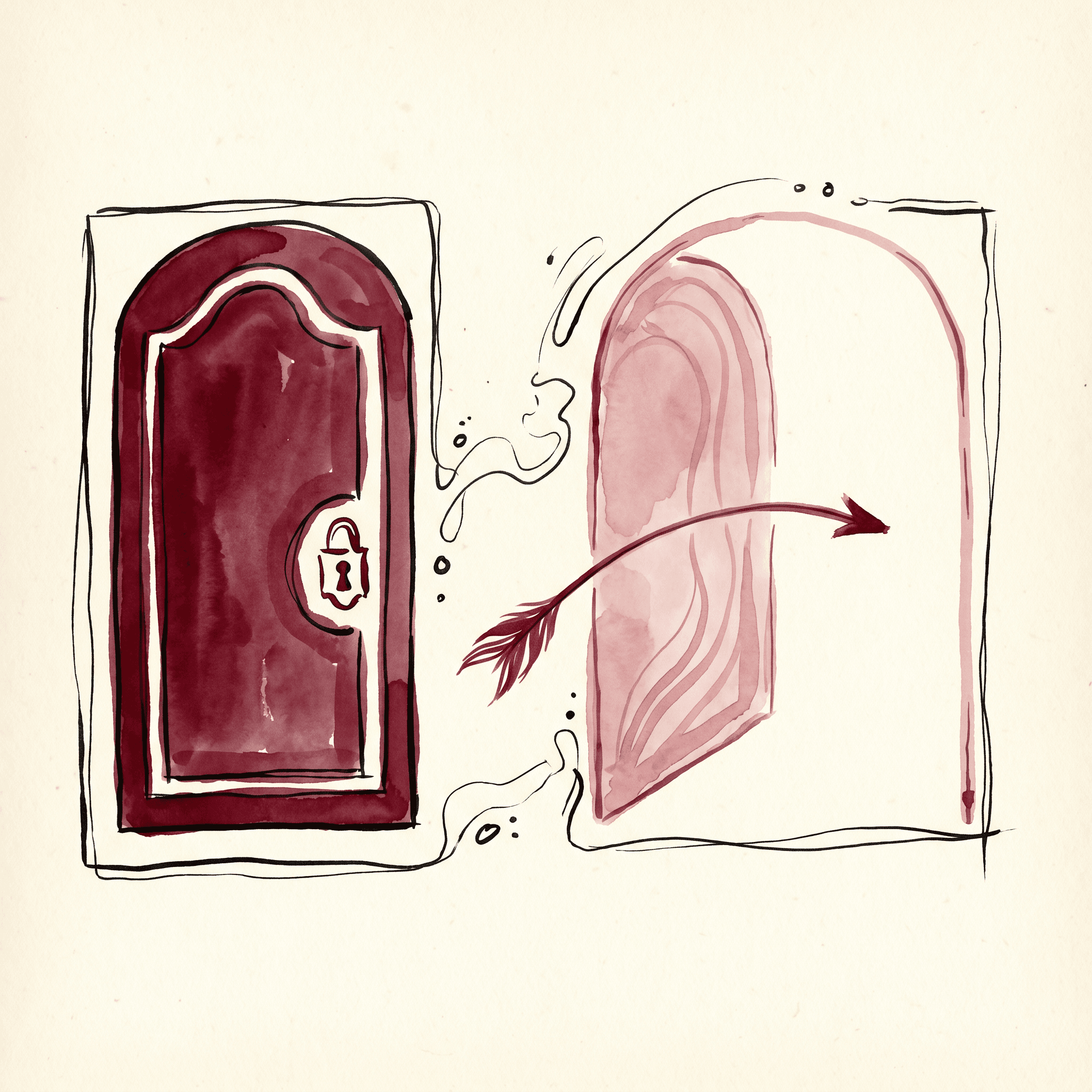
Here is the same set of common affirmations, in both forms.
Two further refinements strengthen the conditional fix:
- Second-person address. Ethan Kross's work on self-distancing shows that addressing yourself as you or by name — "You are learning to trust yourself, Maddie" — lowers emotional reactivity and improves perspective compared with first-person I.Kross et al. 2014 Combining conditional phrasing with second person is the strongest version we know how to construct.
- Specificity over grandeur. "I am someone who answered the hard email today" is more believable, and therefore more effective, than "I am a brave and powerful woman." The brain accepts small, verifiable claims. It refutes sweeping ones.
Why this is the study we built around
We talk about the Wood paradox more than almost any other single finding at HerDay, and it is worth being honest about why. The self-help affirmation industry is, in modality and phrasing terms, mostly built on exactly the declarative statements Wood showed can backfire — and it markets them most aggressively to exactly the low-self-esteem audience the study showed they harm. That is not a small design flaw. It is the central one.
Every affirmation that runs through HerDay is checked against this finding before it reaches you. If your intake suggests a loud inner critic or low current self-belief, declarative phrasing is automatically softened into conditional form — "you are kind" becomes "you are learning to be kinder to yourself." The warmth stays. The grammar changes so the brain can accept it. This is not a stylistic preference. It is the difference, on the evidence, between an affirmation that helps and one that quietly hands you the rebuttal to practice.
The affirmation does not have to be true yet. It only has to be believable. The fix is to claim the direction, not the arrival.
The deeper point the paradox makes is almost gentle. If positive affirmations have made you feel worse, there is nothing wrong with you, and nothing wrong with affirmations in general. The phrasing was simply pitched past where your self-belief currently stands, and your mind did what minds do — it defended what it already held. Move the sentence closer to the truth, phrase it as motion rather than arrival, address yourself the way you'd address a friend, and the same practice that was hurting starts, slowly, to help.

Do affirmations actually work? A 2026 evidence-based review
Affirmations work — but only the kind grounded in your existing values, and only when phrased to match where your self-esteem actually is. Here is what 30 years of psychology research shows, and where most apps get it wrong.
Your inner critic isn't telling the truth — she's reading old data
The inner critic feels like a verdict. The research says she's a reflex — a learned, protective voice repeating old data with high confidence. Here's what Neff, Gilbert, and Kross actually found, and what to do with her tomorrow morning that isn't 'silence her.'
Why your own voice works better — the quiet psychology of hearing yourself
Hearing your own voice changes how a self-statement lands. Not because it's louder — because the brain processes self-voice as identity-relevant data. Here's what 30 years of research on future-self continuity, self-distancing, and voice recognition actually shows.